|
|
|
|
Robert J. Mault, Certified EIFS and Building Envelope Inspector, began working with the largest of the EIFS manufacturers as a Dryvit sales representative in 1984. Since 1997, EIFS & Stucco Inspection & Forensic Services has provided consulting, inspection, testing, peer reviews and expert witness services dealing with EIFS Stucco problems and application protocol on numerous Air Barriers, Exterior Insulation and Finish Systems (EIFS), Cultured Stone Veneer (CSV), Manufactured Stone Veneer (MSV) and Stucco projects in the United States for:
 Attorneys Attorneys
Banks
Building Owners
Condo & Home Owner Associations
Contractors
Developers
EIFS Manufacturers
Home Owners
|
Insurance Companies
Lawrence Livermore National Laboratory
Mortgage Companies
Realtors
Relocation Services
Resorts
Universities
The US Army Corps of Engineers (USACE) & Naval Facilities Engineering Command (NAVFAC)
|
"Thank you for your assistance. We could not have gotten the settlement amount approaching $300,000 without your diligence, professional reports and recommendations.
~ Armand M. Estrada, Attorney - GagenMcCoy
"Robert has been a great asset in ensuring a quality installation on two projects we worked on together. His knowledge is comprehensive, and he is relentless in his followup of any concerns raised in the field. I will continue to recommend him on any projects where EIFS is part of the exterior envelope."
~ Robert Bernstein, Senior Project Manager, Josehard Construction Management, Inc.
"Having contracted EIFS & Stucco Inspection & Forensic Services on over 30 occasions it is clear that we could not have made a better decision in choosing the best inspector. Robert is one of just a few professionals in California that carry an Exterior Design Institute certification. Having worked with hundreds of EIFS and Stucco inspectors throughout the country it was obvious from the beginning that Robert's knowledge and expertise put him in the highest tier of EIFS and Stucco inspectors."
~ Zack Zarlenga, Network Development, US Inspect
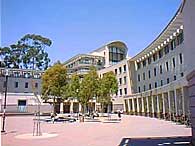
“As lead attorney for the University of California, Santa Barbara, in a Construction Defect lawsuit involving a 10-year-old, 175,000 sq. ft. classroom/office complex suffering water intrusion, I was asked to locate a qualified EIFS inspector. We chose Mr. Robert J. Mault, Principal, EIFS & Stucco Inspection & Forensic Services to carry out a detailed inspection of the EIFS cladding on the building in question. Mr. Mault’s thorough forensic investigation revealed numerous defects that lurked beneath an otherwise normal looking building exterior. His broad knowledge of his field, detailed findings and reports were of great value in reaching a substantial settlement acceptable to the UC Regents.”
~ Christopher Haskell, Counselor at Law, Price, Postel & Parma, LLP
"Mr. Mault has been an invaluable resource to me, as a first-time homeowner and someone who knows nothing about stucco or construction. He was very generous with his time and made sure that I understood the problems and solutions as they pertained to my stucco project. Were it not for Mr. Mault, those problems would have remained latent and may have led to considerable damage in the future. His report was key in helping me and my contractor understand what needed to be done. Thank you!"
~ Lance C. Carter, Hercules, CA
"While working on a design build EIFS project, Robert was a great asset to have on the team as our special inspector. Working in conjunction with the manufacturer of the EIFS product being used, Mr. Mault's experience in the trade was clearly shown as he was able to adapt to the changing details being generated by our design-build subcontractor and the manufacturer. His reports were easy to follow and any items needing to be resolved were quickly taken care of and updated reports sent out in a very timely fashion. I would recommend Robert’s services to anyone constructing a core and shell project in the area."
~ Dustin Johnson, LEED Green Associate- SC Builders - Silicon Valley | San Francisco
" This EIFS expert is just that, an expert on said matter. This company went above and beyond my expectations driving over 100 miles to visit a site for our company that was neglected by another vendor/sub. We were grateful for their prompt service, attention to detail, advice, reporting and we are 100% satisfied with the study of an existing building. The comprehensive report was over 100 pages long, and, as such, hit all targeted objectives. If you need an EIFS expert, I would not hesitate in recommending Robert Mault and his firm, EIFS & Stucco Inspection & Forensic Services. We see this as the start of a long-term relationship and hope to work closely with them in the future."
~Thomas Beachman, Sr. Project Manager/Estimator, Vincor Construction
"We recently consulted with Robert Mault at our home for diagnosis of stucco proglems which we and our contractor had previously been unsuccessful in solving. Robert conducted extensive testing to determine how water was infiltrating our stucco walls, causing stucco damage. We found Robert to be knowledgeable, methodical, thorough and good to work with. After completing his diagnosis, he proactively sought to outline a workable fix in cooperation with our contractor. Without Robert's expertise, it is unlikely that we could so successfully have arrived at the comprehensive plan we now have in place."
~ Don and Linda Hayes, Santa Rosa, California
“In the field of EIFS (Exterior Insulation and Finish System) Robert has unequaled knowledge of the subject matter, systems and inspection methodology. He uses the latest technology to evaluate the condition and serviceability of the wall system and reports in an informative and concise manner. I would highly recommend his services both during construction and to remediate trouble issues.”
~ Donald McCrary, Kalahari Resorts Director of Architecture & Engineering
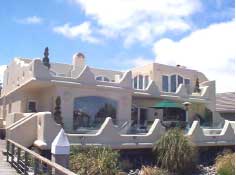
“I just wanted to thank you for the great job you did on the Vino Bello project for Shell Vacations this past year. As the Vice President of Acquisitions, Development and Facilities for Shell Vacations, responsible for the design and construction of the company’s resorts, I need quality consultants and contractors on my team. Your attention to detail on the Vino Bello project was second to none and you will always be a resource for me on future projects."
~ Steven Morell, Shell Vacations Vice President of Acquisitions, Development and Facilities
"Mr. Mault's knowledge and experience with EIFS systems was apparent the moment he stepped foot on our project. I was grateful not only for his adherence to ensuring that the entire EIFS system was installed successfully, but for his pro-active nature in offering guidance on how to complete an approved EIFS system more efficiently. Mr. Mault was a pleasure to work with and a benefit to any EIFS project!"
~Oscar Gutierrez, Assistant Project Manager, Best Interiors
" We contacted EIFS & Stucco Inspection & Forensic Services to assist our team identify the source of extensive stucco cracks. The project consisted of a 1-coat stucco system for a condominium complex less than 10 years old located in Hayward, CA. The services provided were timely executed and completed with a thorough report of the findings and recommendations."
~ Israel De La Cruz, Construction Manager at DLC Construction Management & Engineering
"I contracted EIFS & Stucco Inspection and Forensic Services to report on the installation of both EIFS & stucco systems on my Nave Shopping Center retrofit project in Novato, CA. Mr. Mault's assessments of installation conditions were exact and irrefutable. His expertise and comprehensive reports proved an invaluable asset to me for the duration of the project. EIFS & Stucco Inspection & Forensic Services provided me not only excellent service, but also reliability and confidence in its findings and recommendations -- in other words, peace of mind."
~ Harold Lezzeni, Architect
"He (Robert Mault) is a third party inspector who we used at Presidio of Monterey General Instruction Building. He was good for us."
~Don Marshall, Project Manager, Best Interiors
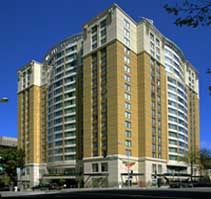
"EIFS & Stucco Inspection and Forensic Services provided a valuable service during the construction of the 17-story, 405 room, Courtyard by Marriott Hotel project in downtown San Francisco. Mr. Mault's detailed and timely inspection services, combined with his proactive approach, helped keep this large project on schedule while maintaining the highest level of quality. His vigilance, knowledge and professionalism were appreciated. I would not hesitate to use his services again."
~ Jeffrey Williams, AIA
"Robert Mault proved to be a great consultant during a waterproofing project done by Anning Johnson. Robert made sure all the guidelines and scope of worked was followed. I received frequent updates and when I had questions Robert was able to answer them and give me all my options. Thanks again!”
~Jim Braun, Pollock Financial Group, Facilities Manager/Building Engineer
“We appreciated everything you did at Union Bank- Long Beach Project. With your expertise in the EIFS Field, your help brought peace of mind that the building was water tight. It has been 4-1/2 years since the project was completed and there have been no complaints or concerns. 'Nothing but praise' from the owner. I hope to work with you again in the near future."
~ Ernie Sauer, Superintendent, STS - Safety Trained Supervisor, Swinerton Builders
“We experienced a disturbing leak in our stucco home causing interior damage, the source of which no one could locate. The developer disavowed any responsibility for the leak. We hired EIFS & Stucco Inspection & Forensic Services to perform water spray testing. The professional crew located the source of the leak in less than a day. Now, the developer is on the hook for repairs. If you have stucco problems, this is the ‘go-to’ company we recommend. Thank you, Mr. Mault.”
~ Erik & Lusy Radza, San Jose, CA
" We are grateful for the thoroughness of your inspection and documentation, as well as the time you took to explain the areas of concern and patiently address our many questions."
~ Chris & Christine Sawyer, Lafayette, CA
“Robert is a dedicated professional for the EIFS - stucco industry”
~ Mark Fowler, Editorial Director at Walls and Ceiling Magazine and Executive Vice President at Western Wall and Ceilings Contractors Association
"Robert inspected and tested the extensive EIFS remediation project on our two office buildings. At one point, during his water spray testing, water intrusion into the interior occurred. Robert demonstrated, to our satisfaction, how the EIFS repairs had nothing to do with the water intrusion that the offices were suffering. He pinpointed a design flaw of the windows and then proposed a successful fix for the leaks. I strongly recommend him."
~Jeff Pollock, VP, Real Estate, Pollock Financial Group
"My vacation home in Healdsburg, CA was experiencing some issues with a new stucco application. I had attempted to get resolution from the stucco applicator to no avail. I retained Robert Mault to investigate and report. In the course of relaying Mr. Mault’s recommendations to the applicator, the applicator inquired who had provided the recommendations. Once he heard Mr. Mault’s name, he immediately made an appointment to revisit. I was amazed at the applicator’s reaction to the mere mention of the Mault name; it apparently carries some weight in this area. Our issues were subsequently corrected. Thank you Mr. Mault."
~John King, Homeowner
"I have bought and sold 6 houses in the last 10 years across 4 states. Robert was the most knowledgeable, thorough and practical inspector I have had help me. He really enjoyed educating me about aspects of the home while pointing out all the features and flaws he came across to keep me informed of what he was looking at during the inspection. Robert provided clear explanation of what likely led to the defect (construction, weather, maintenance, misuse, etc), and was practical about solutions to address it including do-it yourself solutions. Following multiple prior inspections, Robert found many things the other inspectors didn’t acknowledge (but should have). I wish more inspectors mastered their craft with the attention to detail while enjoying working with the customer the way Robert has."
~ Andrew Armpriester
"We have conducted inspections ranging from single family residences to large institutional and commercial projects such as the 1636-room Kalahari Resorts, the 17-story, 405-room Marriott Courtyard, the 300,000 + square foot UCSB classroom/office complexes, and the 198-unit Vino Bello Timeshares in Napa."
~Steve Morell, Vice President, Shell Vacations, LLC
Sampling of Inspections/Investigations:
Numerous private residences, estates and HOAs
399 Freemont Street Apartments, San Francisco
979 Broadway Office Complex, Burlingame, CA
AMC Mercado Theater Multiplex, Santa Clara, CA
Army Corps of Engineers:
- Camp Parks USAR Training Facility, Dublin, CA
- Ft. Hunter-Liggett Range Control Facility, CA
- Presidio of Monterey General Instructions Building 2011
- Presidio of Monterey General Instructions Building 2013
Arpeggio Condos, Berkeley, CA
Bank of America
Berkeley Central Apartments (Arpeggio Building), Berkeley, CA
Bella Vista at Hilltop Apartment Complex, Richmond, CA
Bordeaux Center Office Complex, Sunnyvale, CA
Brownwood-Westcourt Condominiums, Richmond, CA
California Polytechnic State University (Cal Poly), San Luis Obispo, CA
Casinos & Resorts
- Horizon Resort & Casino, Stateline, NV
- Kalahari Resorts Sandusky, OH
- Kalahari Resorts Wisconsin Dells, WI
- M8trix Casino, San Jose, CA
- Universal Studios, Disneyland, Orlando, FL
- Walt Disney World, Orlando, FL
CEIBA Public Schools, Watsonville, CA
Central Contra Costa Sanitary District, Martinez, CA
Chevron, USA
City Gardens Apartment Complex, San Francisco, CA
Clearwater Condominiums, Clearwater, FL
EIFS Manufacturers:
- DRYVIT
- PAREX USA
- STO
Enclave Apartment Complex, Berkeley, CA
Fairfield Inn, Bend, OR
Golden State Lumber Company, San Rafael, CA
Goose Hollow Apartments, Portland, OR
Hadfield-Andulsa Condominiums, San Leandro, CA
Hartz Office Plaza, Danville, CA
Hilton Garden Inn, Burlingame, CA
HUD Project, 440 Turk St., San Francisco, CA
IMETCO Innovative Metals Company-IntelliWrap Division
Kerstetter-Monterey Hotel, Monterey, CA
LandSea Homes 2022 Builder of the Year
Larkspur Apartment Complex, Sacramento, CA
Lawrence Livermore National Laboratory (LLNL), Livermore California
Lombard Plaza Condominiums, San Francisco, CA
Los Angeles County - Edmund D. Edelman Children's Court
Lucille Packard Children’s Hospital Expansion, Stanford, Palo Alto, CA
Marriott Courtyard, San Francisco, CA
Marriott Springfield Suites, Oakland Airport, CA
Middlefield Station Complex, Mountain View, CA
Modoc Medical Center, Alturas, CA
National Retailers
- B. Dalton Bookstores
- Cost Plus
- Home Depot
- J. Jill Corporate, Quincy, MA
National Relocation Companies Subs:
- Fidelity Inspection & Consulting Services
- Global Realty Services
- Globe Spec
- RAL Inspection Services
- US Inspect
Naval Facilities Engineering Command (NAVFAC)
- US Naval Radio Transmit Facility, Dixon, CA
- F35C Simulator Facility, Lenmoore Naval Air Station, Lenmore, CA
Nave Shopping Center, Novato, CA
New Market Lofts Condominiums, Oakland, CA
Office Building, 5550 Skylane Blvd., Santa Rosa, CA
Office Building, 1105 N. Dutton, Santa Rosa, CA
Office Buildings, Bordeau Way, Sunnyvale, CA
Office Building, 949 Broadway, Burlingame, CA
Oracle Headquarters, Santa Clara Campus, CA
Orinda Theater Square, Orinda, CA
Oxford Palace Hotel, LA, CA
Palo Alto Networks Inc. Headquarters, Santa Clara, CA
Paseo Plaza Condominiums Homeowners' Association, San Jose, CA
Pell Office Plaza, Novato, CA
Phoenix Inn, Phoenix, AZ
Placer County Jail, Auburn, CA
Rancho Los Amigos National Rehabilitation Center, LA County Dept. of Health
Retail Complex, 500-600 First Street, San Jose CA
Samaritan Medical Care Center, San Jose, CA
San Francisco Conservatory of Music, San Francisco, CA
San Francisco State University, San Francisco, CA
San Martin County Courthouse, San Martin, CA;
Santa Rosa Airport Circle, Lot 8 & 9 Santa Rosa, CA
Sonoma County Office of Education Building, Santa Rosa, CA
Southfront Business Park, Livermore, CA
St. Francis HOA Condominiums, South San Francisco, CA
Stony Point Lake Commercial Building, Santa Rosa, CA
Stony Point Office Building, Santa Rosa, CA
Springhill Suites Summerfield Senior Care Center, Yuba City, CA
Summerfield Senior Care Center, Yuba City, CA
Summit State Bank, Santa Rosa CA
Temecula Valley Medical Plaza, Temecula, CA
The Lofts Apartment Homes, Sacramento, CA
The Pointe, Office Buildings, Redwood Shores, CA
Trinity Towers, San Francisco, CA
Tri Point Homes (Developer), Northern California Division
UA Theatre Remodel - ACE Hotel, Los Angeles, CA
Union Bank, Long Beach, CA
University of California, Davis (UCD) South Animal Health Laboratory, Tulare, CAr
University of California, Los Angeles (UCLA) CHS South Tower
University of California, Santa Barbara (UCSB)
- ESSB Building
- HSSB Building (Phase I & Phase II)
- Davidson Library Expansion & Remodel
University of Southern California (USC) EDL University Club Remodel; Los Angeles, CA
Venner-Colina Condominiums, Daly City, CA
Vino Bello Timeshares, Napa, CA (Phase I & Phase II)
Westfield Valley Fair Shoppping Mall, San Jose, CA
Additionally, we offer many affiliated inspection, investigation, expert witness and speaking/presentation services.
^top
|
|
|
|
|
 |
|
|